Sussex Playwrights Club [founded 1935].
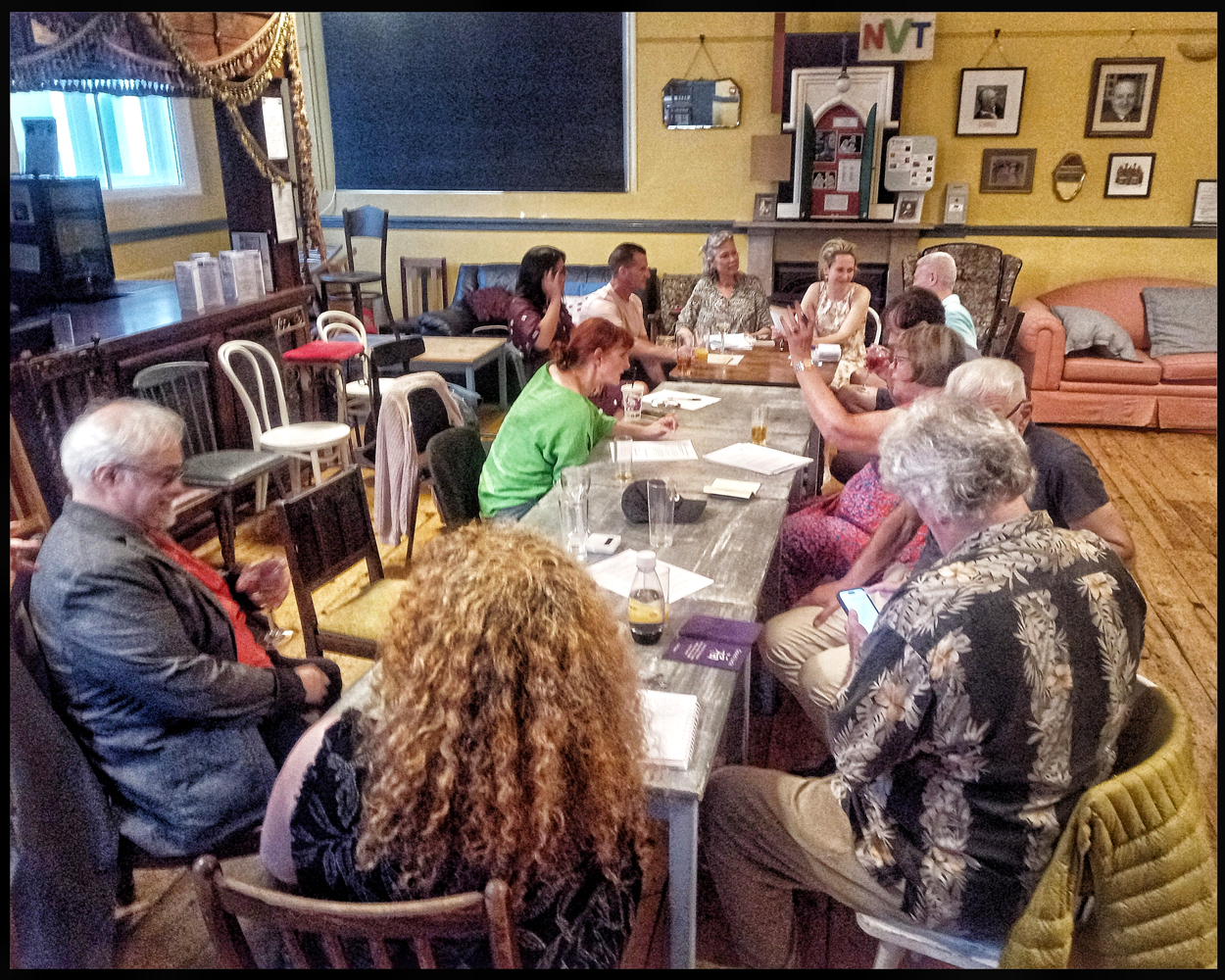
Sussex Playwrights Club [SPC], although separate from the New Venture Theatre, has been holding monthly meetings in the building since NVT moved there in 1958.
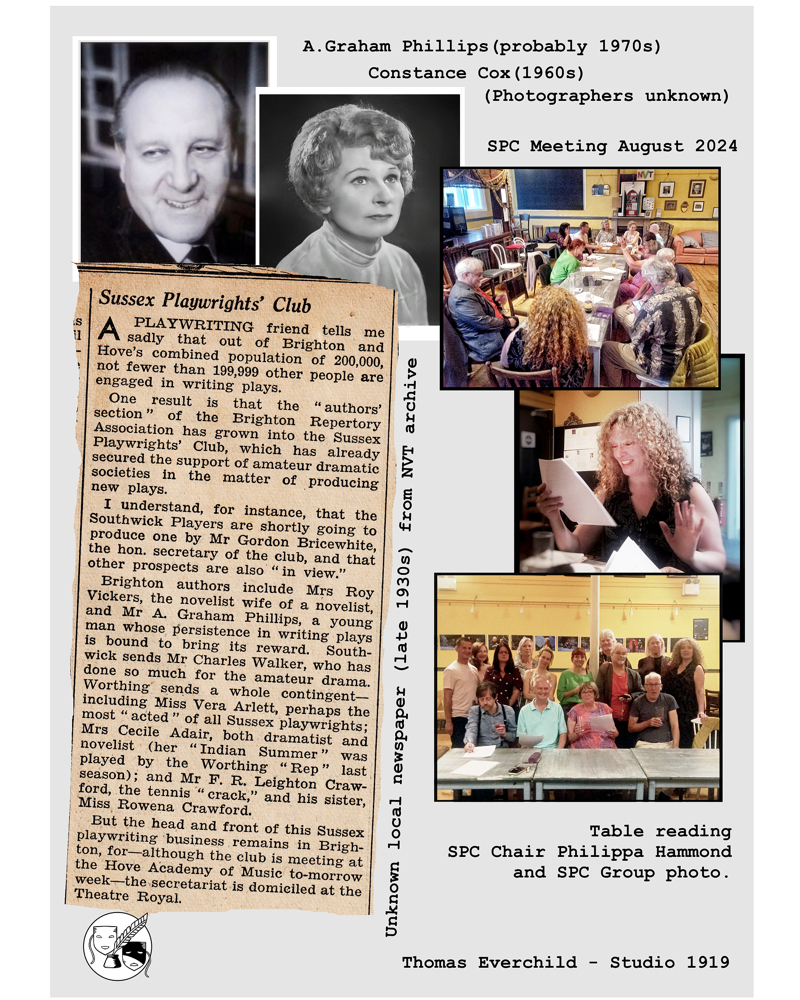
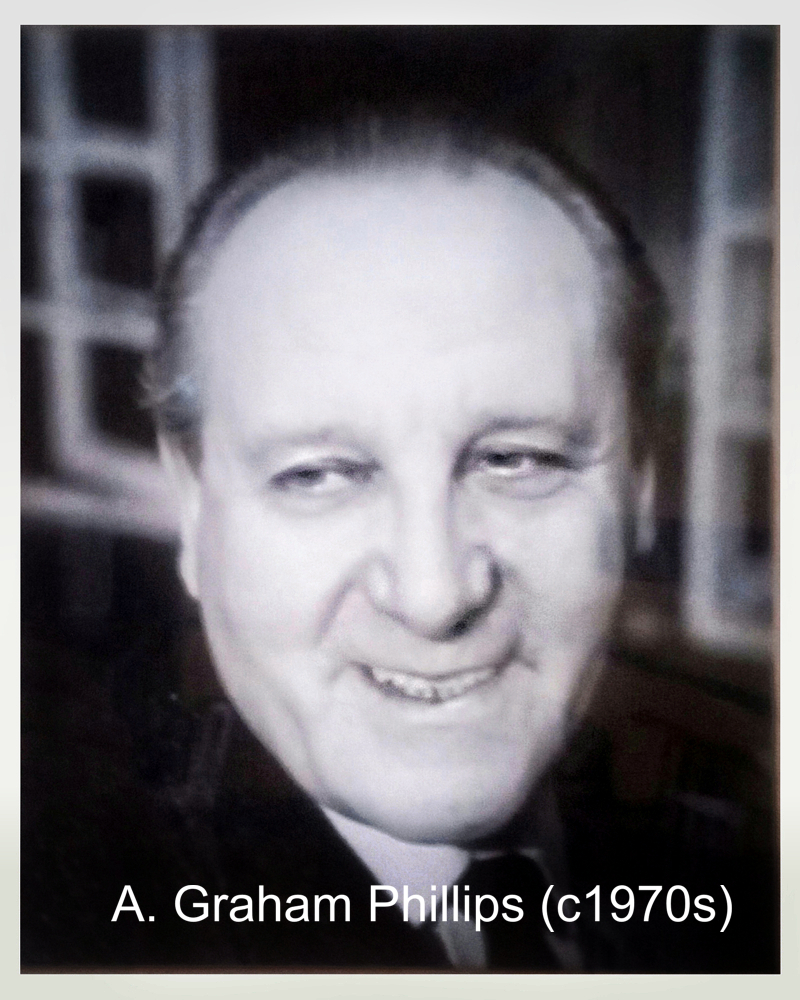
NVT’s founder A. Graham Phillips was a writer and member of SPC from the 1930s and was keen for SPC meetings to take place in the building.
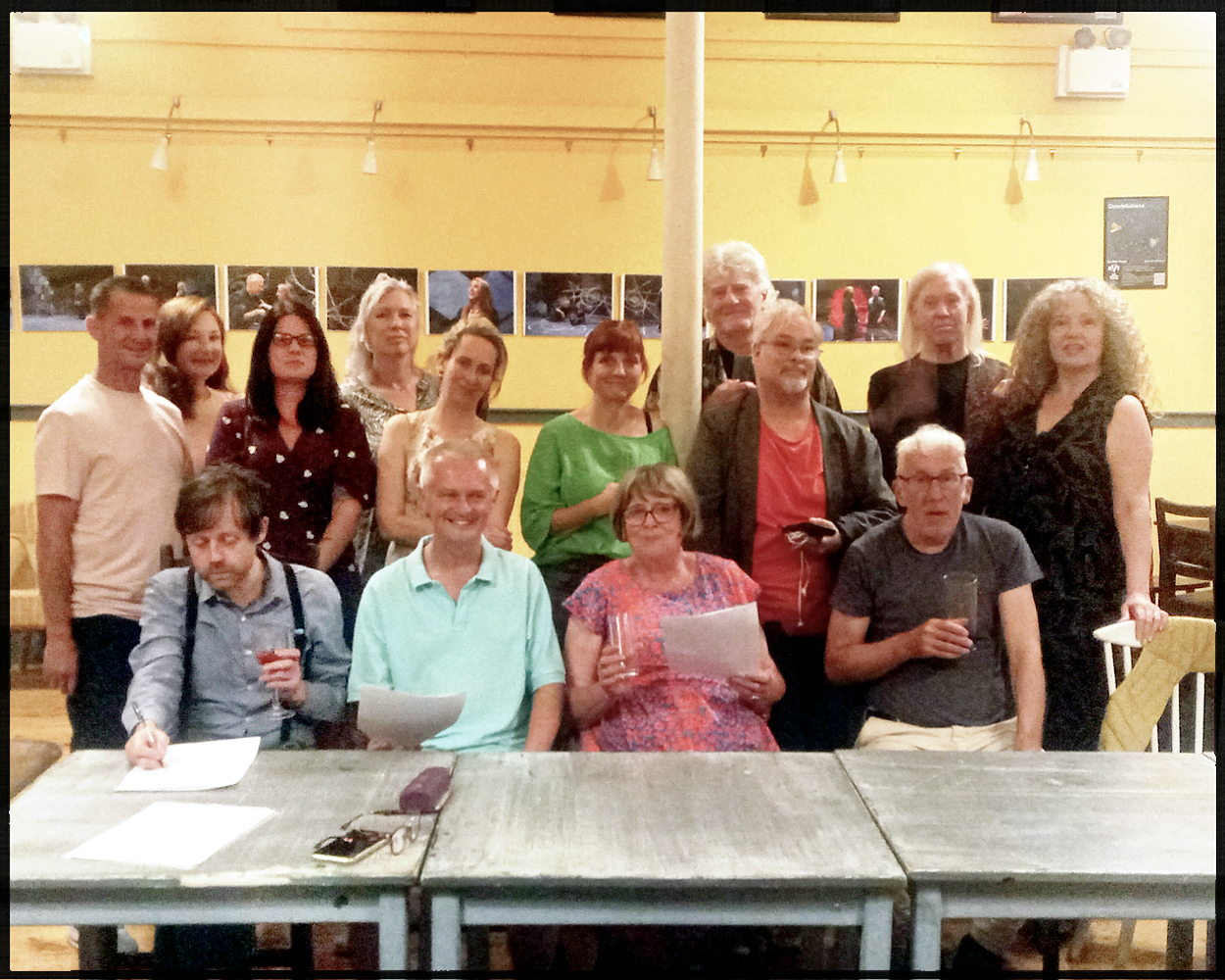
We continue to meet there on the first Sunday of every month, overlooked by a photograph of NVT’s founder.
Our membership includes writers of plays, film, television and radio scripts, plus actors and directors. We also support self-producing writers for fringe theatre and podcasts and beginners who want to try out their work and gain feedback and confidence.
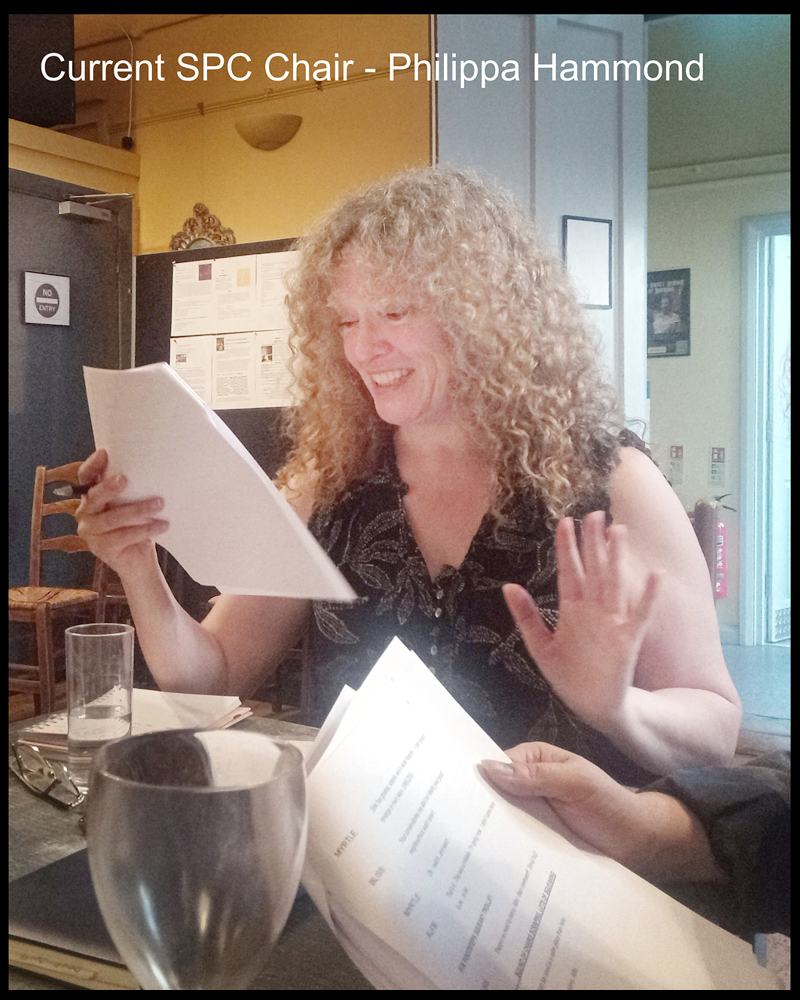
We hold table readings and discussions, have occasionally produced members’ work and run competitions also open to non-members. A recent bequest has allowed us to announce the Ken Lucas Award for a radio script.
Our current Honorary President and Vice President are Oscar nominee William Nicholson, and award-winning local playwright Judy Upton.
The origins of Sussex Playwrights go back to 1935 BT [Before Television]. Charles Walker co-founded SPC in the Circle Bar of the Theatre Royal, Brighton. That same year he also founded Southwick Players, their first production, in 1936, ‘Emergency Exit’, a play by SPC member Gordon Bricewhite.
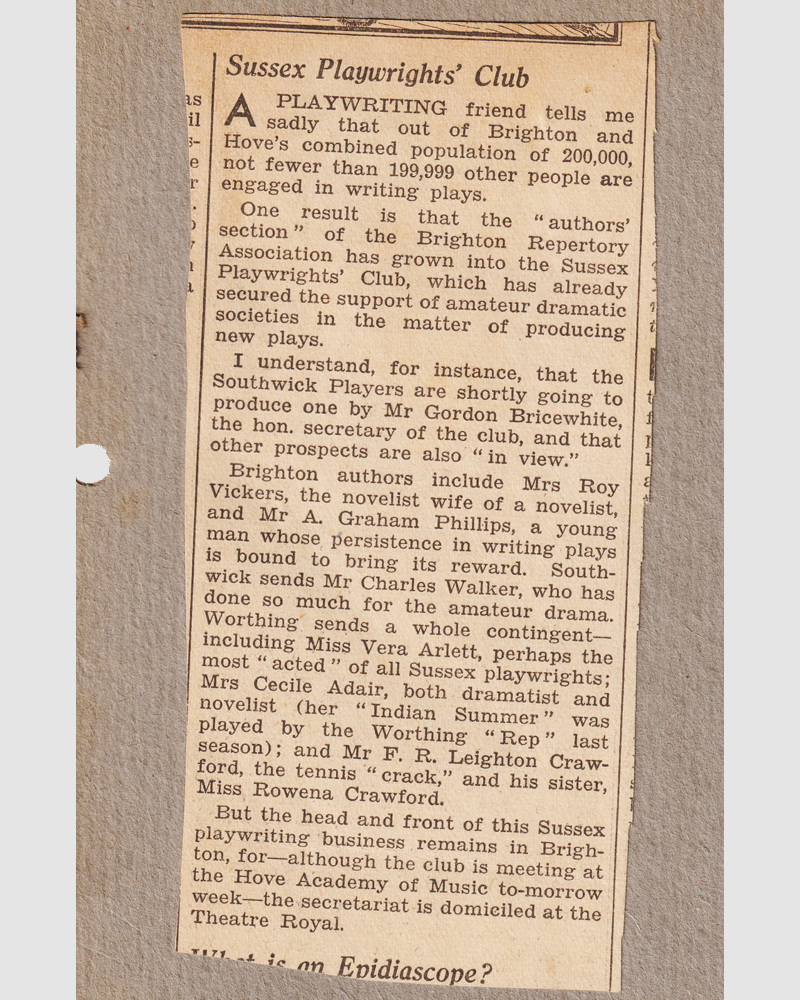
A newspaper cutting from the 1930s tells us that SPC grew out of the authors’ section of the Brighton Repertory Association and that it had the support of amateur dramatic societies in the matter of producing new plays.
Early SPC meetings were held in various locations but it seems the committee continued to meet at the Theatre Royal [probably in the bar].
Early play readings included Lottie Dundass by Rottingdean resident Enid Bagnold, who had already written National Velvet. Theatre impresario CB Cochrane travelled from London for the reading and the play reached the West End in 1943.
With the arrival of television slowly taking the place of theatre for dramatic entertainment in post-war Britain, we flash forward to the 1950s.
Enter Constance Cox, wartime (sub) postmistress, playwright and pioneer television writer. Her grimly realistic 1962 BBC adaptation of Oliver Twist led to questions in Parliament.
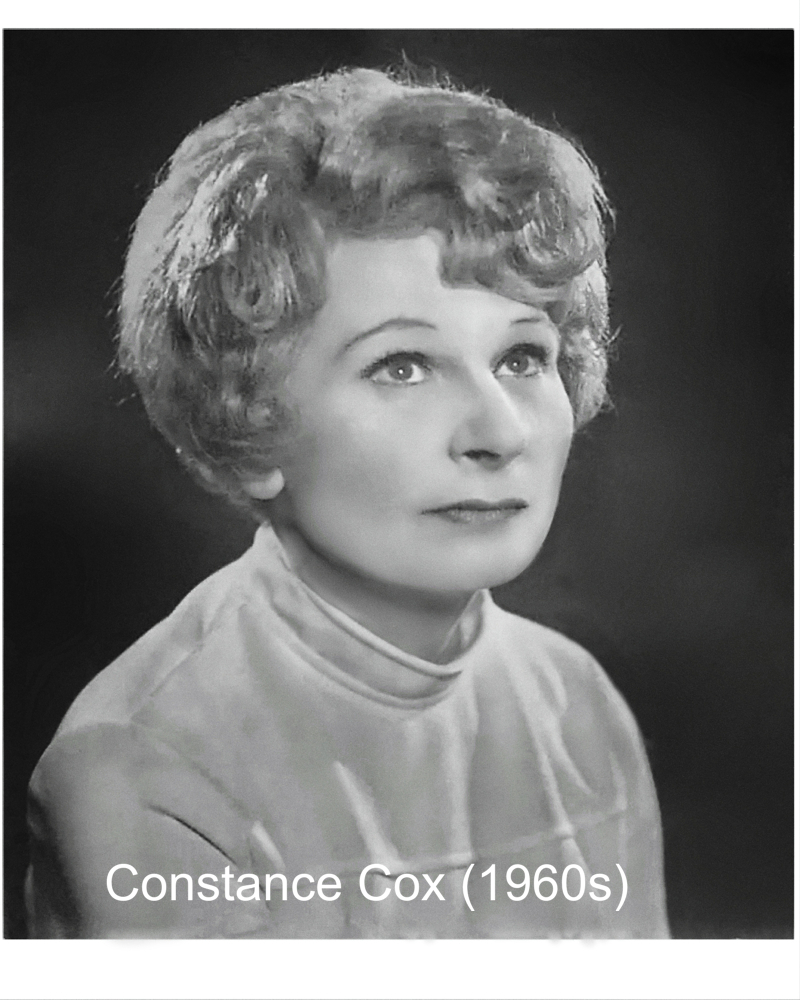
Constance was a prominent member into the 1990s. SPC launched the Constance Cox award in her honour, following her death in 1998.
With the arrival of television slowly taking the place of theatre for dramatic entertainment in post-war Britain, we flash forward to the 1950s. Enter Constance Cox, wartime (sub) postmistress, playwright and pioneer television writer. Her grimly realistic 1962 BBC adaptation of Oliver Twist led to questions in Parliament. Constance was a prominent member into the 1990s. SPC launched the Constance Cox award in her honour, following her death in 1998.
Through the 60s and 70s Fringe theatre spread out from Edinburgh with festivals appearing in various parts of the country; this period saw great change in opportunities for writing for live performance.
For the first ever Brighton Festival in 1967, SPC arranged a theatre forum at the Royal Pavilion. Guest panellists included Tom Stoppard. Extracts from his Rosencrantz and Guildenstern Are Dead were performed by Edward Petherbridge and John Stride.
Over the last ten years, we’ve reviewed many productions, staged script-in-hand readings with professional actors and hosted Brighton Fringe previews, writing challenges and industry guest speakers.
Today, there are multiple TV channels, a growing number of short film festivals, the continuing of the Fringe and the popularity of the ten minute play, self publishing, podcasts and print-on-demand publishing.
There are many new opportunities for writers to get their work out there.
www.sussexplaywrights.co.uk
Thomas Everchild, with acknowledgement to Trevor Harvey and Peter Meekings